
9 Common House Painting Mistakes to Avoid on the Gold Coast
A fresh coat of paint should feel like a quick win, but the Gold Coast can turn a “simple weekend job” into peeling walls and patchy gloss. Humidity hangs in the air, salty sea spray drifts through coastal suburbs, summer storms roll in fast, and strong sun can heat a wall like a barbecue plate. Paint doesn’t love any of that.
The good news is most problems come from a handful of repeat mistakes, not bad luck. Whether you’re doing it yourself or comparing quotes from House Painters Gold Coast, this guide breaks down the most common stuff-ups that waste time and money, plus the easy ways to avoid them.
Prep mistakes that make paint peel, bubble, or look patchy
Prep is the part everyone wants to skip, and then everyone regrets. On the Gold Coast, the biggest enemy is what you can’t see at first glance: salt film, fine dust, mold spores, and damp that hangs around longer than you think.
Skipping a proper wash, mold treatment, and salt removal
If the surface is dirty, paint sticks about as well as a sticker on a wet esky. Near the coast, salty residue can sit on walls and railings even when they “look clean.” Add mold in shaded spots, and you’ve got a recipe for bubbling, flaking, or that grimy shadow that shows through the new coat.
A simple process works better than any shortcut:
- Clean with a suitable exterior wash to remove grime and chalky residue.
- Treat mold (don’t just paint over it), then give it the dwell time it needs.
- Rinse well to remove loosened dirt, cleaner, and salt.
- Let it dry fully, not “dry to the touch.” Give it extra time after rain or on shaded sides.
Safety basics matter here. Wear gloves, protect your eyes, and keep airflow moving when using mold treatments, especially in bathrooms, stairwells, and enclosed patios.
Painting over flaking paint or glossy surfaces without sanding
Loose paint is already telling you it’s done. If you paint over it, the new coat bonds to the failing layer, not the wall, so it lifts again, often taking your fresh paint with it. Glossy surfaces have the opposite problem; they’re too smooth, so new paint can’t grip.
A basic prep checklist saves the finish:
- Scrape anything that’s lifting or sounds hollow.
- Sand to feather the edges so they don’t “telegraph” through the topcoat.
- Dust off (or wipe down) before priming; dust is a bond breaker.
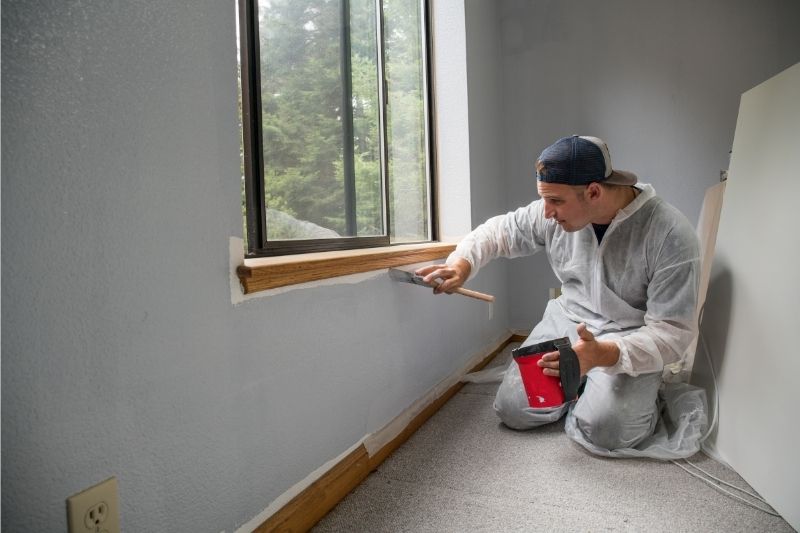
If you’ve got dents, holes, or deep edges after scraping, that’s when patching compound earns its keep. Let it set, sand it flush, then remove dust again.
Rushing repairs, gaps, and timber rot instead of fixing the cause
Paint won’t fix water entry. If gaps around windows are open, if old caulk has split, or if timber is soft around sills, eaves, decks, and balustrades, moisture will keep getting in. On the Gold Coast, that moisture often comes with heat and humidity, which speeds up decay and pushes paint off from behind.
Do the unglamorous work first: seal gaps, recaulk failed joints, and replace rotten timber where needed. Let fillers cure properly (not just “skin over”), and stop leaks before you seal anything up. Otherwise the problem comes back, and it usually comes back bigger.
Using the wrong primer, or skipping primer altogether
Primer isn’t optional when the surface needs it. It’s the bridge between your wall and the topcoat. Skip it, and you can end up with uneven sheen, patchy color, or stains that creep back through.
Keep it simple:
- Bare timber needs a primer made for timber.
- Stained areas and watermarks need a stain-blocking primer.
- New plaster or fresh patching often needs a sealing primer to stop suction.
- Previously painted walls may still need spot-priming where you’ve sanded back or repaired.
Timber on older homes can also release tannins (a yellow-brown stain) that bleed through light colors. A stain-blocking primer helps stop that before it ruins the topcoat.
Product and weather slip-ups that ruin the finish in Gold Coast conditions
On the Gold Coast, paint choice and timing matter as much as technique. Humidity slows drying, storms can hit mid-afternoon, and UV can fade and break down weak exterior coatings.
Choosing interior paint for outside or the wrong sheen for the room
Interior paint outside is a fast way to get early cracking, chalking, and fading. Exterior paint is made to cope with UV, rain, and movement from heat. If you’re painting fascias, weatherboards, or fences, use a true exterior formula that suits that surface.
Indoors, sheen is less about style and more about cleanability and flaw-hiding:
- Flat or matte works well for ceilings and lower-traffic walls; it hides bumps.
- Low sheen is a solid all-rounder for living areas and bedrooms.
- Semi-gloss suits trims, doors, kitchens, and bathrooms where wiping is common.
Put high sheen on a wavy wall, and it’s like turning a spotlight on every little patch.
Painting in high humidity, right before rain, or in harsh sun
Humidity can keep paint tacky for hours longer than expected. That can lead to surfactant leaching (brownish streaks on fresh paint), dust sticking to the surface, or soft paint that marks easily. Paint right before rain, and you risk wash-off, spotting, and uneven curing. Paint a hot wall in full sun, and it can dry too fast, leaving lap marks or dragging.
A few Gold Coast-friendly timing habits help:
Paint earlier in the day when you can, watch the forecast for afternoon storms, and don’t push recoat times. Also remember shaded sides of the house can stay damp longer, especially near gardens, pools, and downpipes.
Putting on thick coats and not following dry times between coats
Thick coats feel efficient, but they often “skin over” and trap moisture underneath. Later, that trapped moisture can cause wrinkling, soft spots, or peeling, even if it looked fine on day one.
Aim for two thinner coats. Use the right roller nap for the surface, keep a wet edge, and slow down enough to let each coat dry properly. If it feels a little boring, that’s usually a good sign you’re doing it right.
Not protecting nearby surfaces or using the wrong tools for the job
Overspray on a roof, speckled pavers, roller flick on pool fencing, or paint dust on outdoor furniture can turn a paint job into a cleanup job. Protection is part of the finish.
Use drop sheets on decks, pavers, and around plants, and cover pools and water features where splatter can travel. For tools, a quality brush for cutting in, the correct roller nap for walls, an extension pole for steadier rolling, and painter’s tape used on clean, dry surfaces will keep lines sharp and stress low.
People and planning mistakes that blow the budget, timeline, and results
Even a careful painter can get tripped up by planning errors. These are the ones that usually cause extra trips to the paint shop, rushed decisions, and costs that creep up late.
Underestimating how much paint you need and forgetting color testing
Running out mid-wall is more common than people think. Porous surfaces soak up paint, strong color changes need extra coats, and textured walls drink more than smooth ones. Buy enough to finish the job, and where possible, get it from the same batch to reduce slight color shifts.
For color testing, paint a large sample area, not a tiny swatch. Check it in morning and afternoon light, then let it dry fully before deciding. The Gold Coast sun can make a color look lighter and warmer than it will on a cloudy day.
Hiring on price alone instead of checking experience with coastal homes
The cheapest quote can cost more if prep gets skipped or the wrong system is used. Coastal homes need a painter who understands salt exposure, humidity, and how fast weather can change.
Before you hire, look for a license and insurance, a clear written quote, prep steps listed, products specified, a workmanship guarantee, and recent local examples. A team like Inspirations Property Service should be able to explain prep, primer choices, and timing for Gold Coast conditions in plain language, without brushing off your questions.
Conclusion
Most Gold Coast paint failures come down to the same nine mistakes: poor washing and mold removal, skipping sanding, ignoring rot and gaps, wrong primer, wrong paint type or sheen, bad weather timing, thick coats with rushed recoat times, messy protection and tool choices, and weak planning around paint amounts, color tests, and hiring.
Keep this final checklist handy:
- Clean, desalt, treat mold, and dry fully
- Scrape and sand before you paint.
- Fix leaks, gaps, and rotten timber first.
- Prime the right areas with the right primer
- Use exterior-grade paint outside.
- Avoid humidity spikes, rain windows, and hot walls.
- Apply two thinner coats and wait for dry times
- Protect surfaces and use the right tools
- Plan quantities, test color, and hire carefully.
If you want a second opinion before you start, get advice or a quote from a local painter who knows Gold Coast conditions.